Category: Vegetarian

  • Ratatouille : chaque légume dans sa poêle

    Ratatouille : chaque légume dans sa poêle

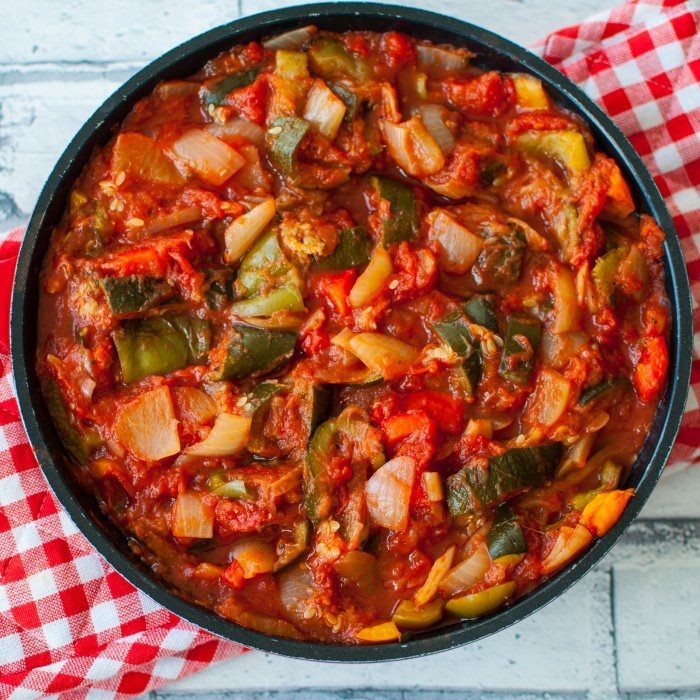
    La faute classique consiste à jeter tous les légumes dans la cocotte en même temps. Les courgettes rendent leur eau, les aubergines s’effondrent, et l’on obtient une purée brune. La vraie ratatouille se fait légume par légume, dans la même poêle, avant de tout réunir à la fin.

    Ingrédients

    • 2 grosses aubergines en dés
    • 4 courgettes en rondelles épaisses
    • 2 poivrons jaunes en lanières
    • 4 grosses tomates mondées et concassées
    • 1 oignon moyen émincé
    • 3 gousses d’ail hachées finement
    • 5 cuillères à soupe d’huile d’olive
    • 1 bouquet de basilic
    • 1 cuillère à café de vinaigre de vin rouge
    • 1 cuillère à café de sucre

    Préparation

    1. Salez les dés d’aubergine et laissez-les dégorger 30 minutes dans une passoire, puis épongez-les.
    2. Faites revenir les aubergines dans 2 cuillères d’huile bien chaude, 8 minutes, jusqu’à ce qu’elles soient dorées. Réservez.
    3. Dans la même poêle, saisissez les courgettes 5 minutes, puis les poivrons 6 minutes. Réservez séparément.
    4. Ajoutez le reste d’huile, faites fondre l’oignon 10 minutes à feu doux, puis l’ail 1 minute.
    5. Ajoutez les tomates, le sucre et le vinaigre, et laissez compoter 15 minutes à découvert.
    6. Réunissez tous les légumes, réchauffez 5 minutes ensemble et ajoutez le basilic ciselé hors du feu.

    Astuce

    Meilleure le lendemain, et tiède plutôt que brûlante. Les parfums ont le temps de se répondre pendant la nuit.

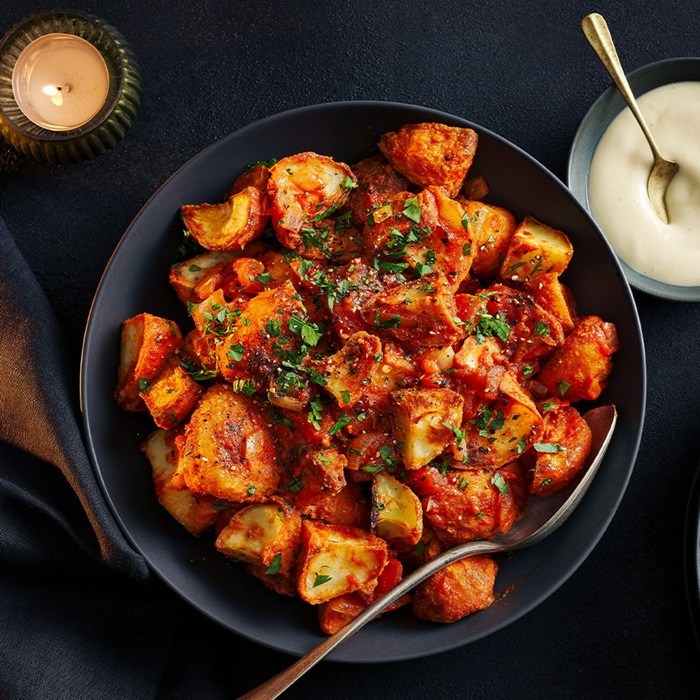
  • Air fryer patatas bravas

    Air fryer patatas bravas

    Air fryer patatas bravas is a spanish vegetarian favourite that comes together with everyday ingredients and a little patience. Here’s how we make it in our test kitchen.

    Ingredients

    • 900g Potatoes
    • 3 tablespoons Olive Oil
    • 1 chopped Onion
    • 1 clove peeled crushed Garlic
    • 1 tblsp Paprika
    • 1 tblsp Tomato Puree
    • 225g Tinned Tomatos
    • To serve Basil Leaves

    Method

    Soak the potatoes in just-boiled water for 30 mins, then drain and leave to air-dry for 5 mins. Heat the air fryer to 200C. Tip the potatoes into a bowl and drizzle over 1 tbsp of the oil and add 1/2 tsp each of salt and freshly ground black pepper. Mix to coat the potatoes all over, then tip into the air fryer basket and cook for 20-30 mins until crisp and golden.

    Meanwhile, heat the remaining oil in a small pan over a medium-low heat and fry the onion for 8-10 mins until softened but not golden. Stir in the garlic and cook for a minute before adding the paprika and cooking for 30 seconds more. Stir in the tomato purée, cook for 1 min, then tip in the chopped tomatoes. Cook for 5-10 mins over a medium heat until thickened slightly.

    Once the potatoes are cooked, tip out onto a platter and pour over the tomato sauce. Sprinkle with the basil leaves, then serve.

    Want to watch it come together? See the full walkthrough.

  • Algerian Flafla (Bell Pepper Salad)

    Algerian Flafla (Bell Pepper Salad)

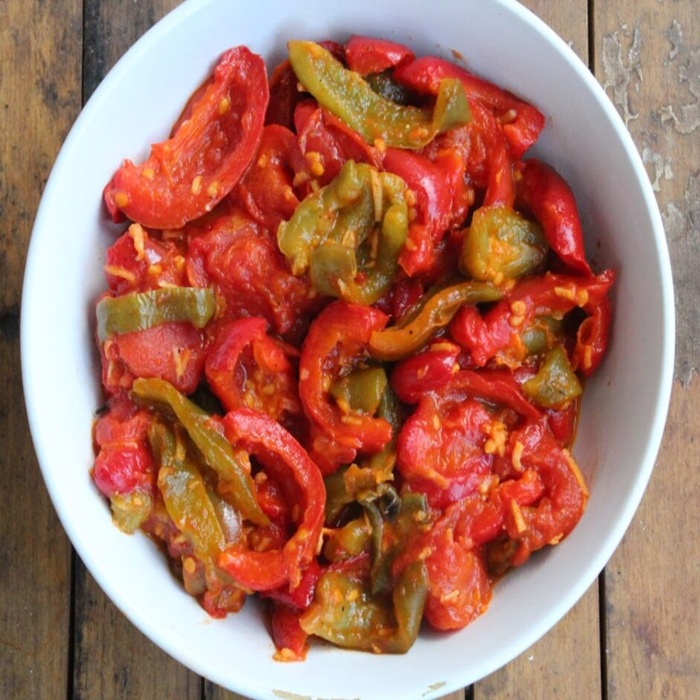
    Algerian Flafla (Bell Pepper Salad) is a algerian vegetarian favourite that comes together with everyday ingredients and a little patience. Here’s how we make it in our test kitchen.

    Ingredients

    • 3 Green Pepper
    • 1 tablespoon Olive Oil
    • 1 tablespoon chopped Red Onions
    • 1 clove peeled crushed Garlic
    • To taste Salt
    • To taste Pepper
    • 1 Diced Plum Tomatoes

    Method

    Preheat an oven to 450 degrees F (230 degrees C). Place the whole peppers on aluminum foil. Bake until the skin is spotted black and the peppers are soft, 30 to 45 minutes, turning the peppers once if necessary.

    Remove peppers from the oven and set aside to cool for 10 minutes. Peel off the skin and remove the stem and seeds. Chop the roasted peppers into half-inch pieces.

    Heat the olive oil in a skillet over medium heat. Stir in the onion and cook, stirring frequently, until the onion has softened and turned translucent, about 5 minutes. Add the garlic, salt, and pepper; stir in the chopped peppers and tomato. Cook over medium heat, stirring occasionally, until the tomato is soft and the mixture is well incorporated, about 5 minutes.

    Want to watch it come together? See the full walkthrough.

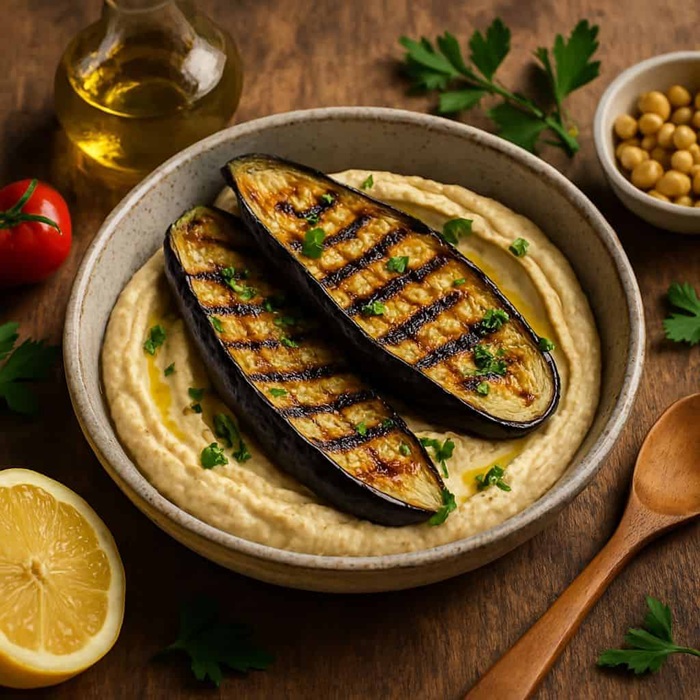
  • Aubergine & hummus grills

    Aubergine & hummus grills

    Aubergine & hummus grills is a turkish vegetarian favourite that comes together with everyday ingredients and a little patience. Here’s how we make it in our test kitchen.

    Ingredients

    • 2 Aubergine
    • 2 tablespoons Vegetable Oil
    • 3 sliced thinly Bread
    • 300g Hummus
    • 100g Walnuts
    • 40g Parsley
    • 200g Cherry Tomatoes
    • Juice of 1/2 Lemon
    • Splash Extra Virgin Olive Oil

    Method

    Lay the aubergine out in one layer on a large baking sheet. Brush sparingly with vegetable oil, then season generously. Grill for 15 mins, turning twice and brushing with oil until the slices are softened and cooked through. Meanwhile, whizz the bread into crumbs. Add 2 tsp oil and whizz briefly again, to coat.

    Spread a couple of tsps of hummus on top of each slice of aubergine. Tip the breadcrumbs onto a large plate, then press the hummus side of the aubergines into the crumbs to coat. Grill again, crumb-side up, for about 3 mins until golden.

    Toss the walnuts, parsley and cherry tomatoes in a bowl, season, then add the lemon juice and olive oil and toss again. Serve the grills with the salad, a dollop more hummus and some pitta bread.

    Want to watch it come together? See the full walkthrough.

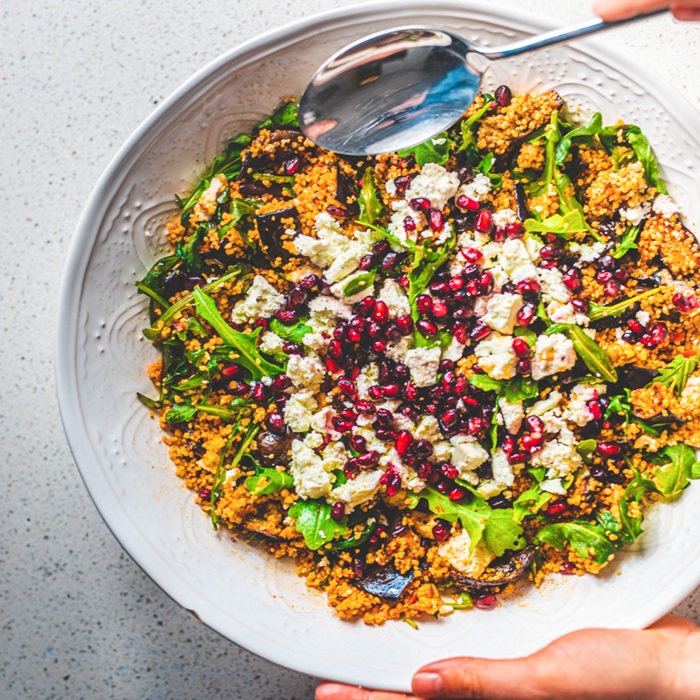
  • Aubergine couscous salad

    Aubergine couscous salad

    Aubergine couscous salad is a turkish vegetarian favourite that comes together with everyday ingredients and a little patience. Here’s how we make it in our test kitchen.

    Ingredients

    • 1 sliced Aubergine
    • 3 tablespoons Olive Oil
    • 140g Couscous
    • 225g Vegetable Stock
    • 200g Cherry Tomatoes
    • Handful Mint
    • 100g Goats Cheese
    • Juice of 1/2 Lemon

    Method

    Heat grill to high. Put the aubergine on a baking sheet, brush with oil and season. Grill for about 15 mins, turning and brushing with more oil halfway, until browned and softened.

    Meanwhile, tip the couscous into a large bowl, pour over the stock, then cover and leave for 10 mins. Mix the tomatoes, mint, goat’s cheese and remaining oil together. Fluff the couscous up with a fork, then stir in the aubergines, tomato mixture and lemon juice.

    Want to watch it come together? See the full walkthrough.

  • Avocado dip with new potatoes

    Avocado dip with new potatoes

    Avocado dip with new potatoes is a australian vegetarian favourite that comes together with everyday ingredients and a little patience. Here’s how we make it in our test kitchen.

    Ingredients

    • 3 Large Avocado
    • 200g Natural Yoghurt
    • Zest and juice of 1 Lime
    • Juice of 1/2 Lemon
    • 1.25kg Baby New Potatoes
    • 2 tablespoons Olive Oil
    • 1 teaspoon Hot Chilli Powder
    • 1 teaspoon Cumin Seeds
    • 200g Tortillas

    Method

    Whizz half the avocado flesh with the yogurt, lime and lemon juice and seasoning. Dice the remaining avocado, then gently stir into the whizzed mix with most of the lime zest. Cover, then chill until ready to serve.

    Boil potatoes for 6 mins, then drain well and toss with olive oil, chilli powder and cumin seeds. Now set aside until half an hour before your guests arrive.

    Heat oven to 200C/180C fan/gas 6, then roast potatoes for about 30 mins, shaking the tray halfway, until golden and tender. Transfer the dip to one or two bowls, scatter with the remaining lime zest and serve with the hot potatoes, and tortilla chips for dipping.

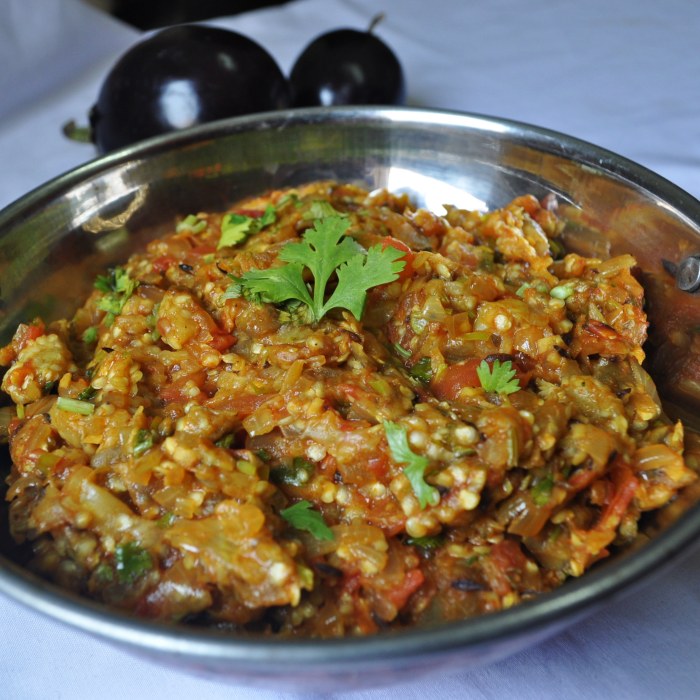
  • Baingan Bharta

    Baingan Bharta

    Baingan Bharta is a india vegetarian favourite that comes together with everyday ingredients and a little patience. Here’s how we make it in our test kitchen.

    Ingredients

    • 1 large Aubergine
    • ½ cup Onion
    • 1 cup Tomatoes
    • 6 cloves Garlic
    • 1 Green Chilli
    • ¼ teaspoon Red Chilli Powder
    • 1.5 tablespoon Oil
    • 1 tablespoon chopped Coriander Leaves
    • as required salt

    Method

    Rinse the baingan (eggplant or aubergine) in water. Pat dry with a kitchen napkin. Apply some oil all over and

    keep it for roasting on an open flame. You can also grill the baingan or roast in the oven. But then you won’t get

    the smoky flavor of the baingan. Keep the eggplant turning after a 2 to 3 minutes on the flame, so that its evenly

    cooked. You could also embed some garlic cloves in the baingan and then roast it.

    2. Roast the aubergine till its completely cooked and tender. With a knife check the doneness. The knife should slid

    easily in aubergines without any resistance. Remove the baingan and immerse in a bowl of water till it cools

    down.

    3. You can also do the dhungar technique of infusing charcoal smoky flavor in the baingan. This is an optional step.

    Use natural charcoal for this method. Heat a small piece of charcoal on flame till it becomes smoking hot and red.

    4. Make small cuts on the baingan with a knife. Place the red hot charcoal in the same plate where the roasted

    aubergine is kept. Add a few drops of oil on the charcoal. The charcoal would begin to smoke.

    5. As soon as smoke begins to release from the charcoal, cover the entire plate tightly with a large bowl. Allow the

    charcoal smoke to get infused for 1 to 2 minutes. The more you do, the more smoky the baingan bharta will

    become. I just keep for a minute. Alternatively, you can also do this dhungar method once the baingan bharta is

    cooked, just like the way we do for Dal Tadka.

    6. Peel the skin from the roasted and smoked eggplant.

    7. Chop the cooked eggplant finely or you can even mash it.

    8. In a kadai or pan, heat oil. Then add finely chopped onions and garlic.

    9. Saute the onions till translucent. Don’t brown them.

    10. Add chopped green chilies and saute for a minute.

    11. Add the chopped tomatoes and mix it well.

    12. Bhuno (saute) the tomatoes till the oil starts separating from the mixture.

    13. Now add the red chili powder. Stir and mix well.

    14. Add the chopped cooked baingan.

    15. Stir and mix the chopped baingan very well with the onion­tomato masala mixture.

    16. Season with salt. Stir and saute for some more 4 to 5 minutes more.

    17. Finally stir in the coriander leaves with the baingan bharta or garnish it with them. Serve Baingan Bharta with

    phulkas, rotis or chapatis. It goes well even with bread, toasted or grilled bread and plain rice or jeera rice.

    Want to watch it come together? See the full walkthrough.
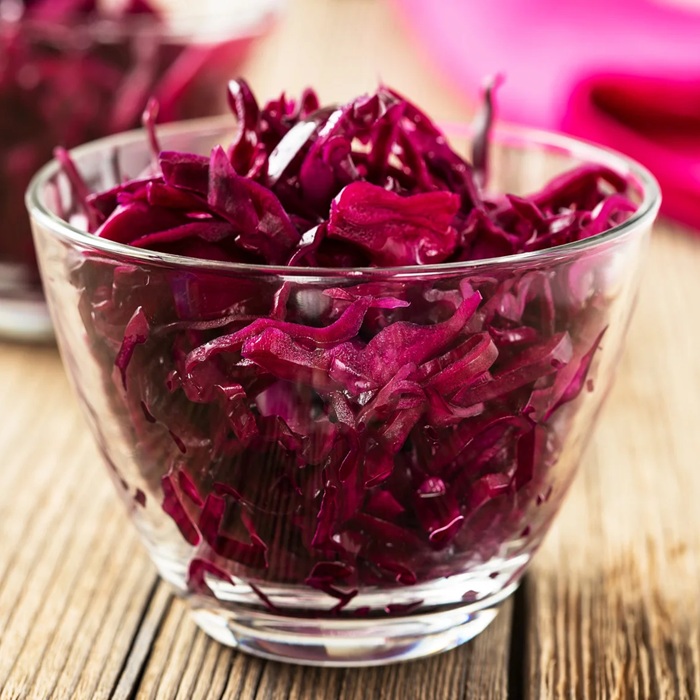
  • Beetroot & red cabbage sauerkraut

    Beetroot & red cabbage sauerkraut

    Beetroot & red cabbage sauerkraut is a polish vegetarian favourite that comes together with everyday ingredients and a little patience. Here’s how we make it in our test kitchen.

    Ingredients

    • 320g Beetroot
    • 450g Red Cabbage
    • 1 small Onion
    • 2 tsp Caraway Seed
    • 1 tsp Sea Salt

    Method

    Tip all the ingredients into a large bowl, add 1-1½ tsp freshly ground black pepper, then scrunch it all together with your hands for 5 mins. You might want to wear gloves to avoid staining your skin with the beetroot juices.

    Press the veg down in the bowl with your hands, then cover the surface and up the side of the bowl with a large sheet of compostable cling film or something reusable like a beeswax wrap. Now place another similar-sized bowl on top. Press down hard and add anything heavy (packs of rice or cans work well) to weigh it down so the juices rise to cover the surface. Cover again.

    Leave to ferment at room temperature for at least five days, but for maximum flavour, leave for one-five weeks (until the bubbling subsides).

    Check the sauerkraut. After a few days, you will see bubbles that have built up as it ferments. Give it a stir, then cover and weigh it down again as before. The cabbage will become increasingly sour the longer it’s fermented, so taste it now and again. When you like the flavour, transfer it to sterilised jars and keep chilled. Will keep chilled for up to six months.

    Want to watch it come together? See the full walkthrough.

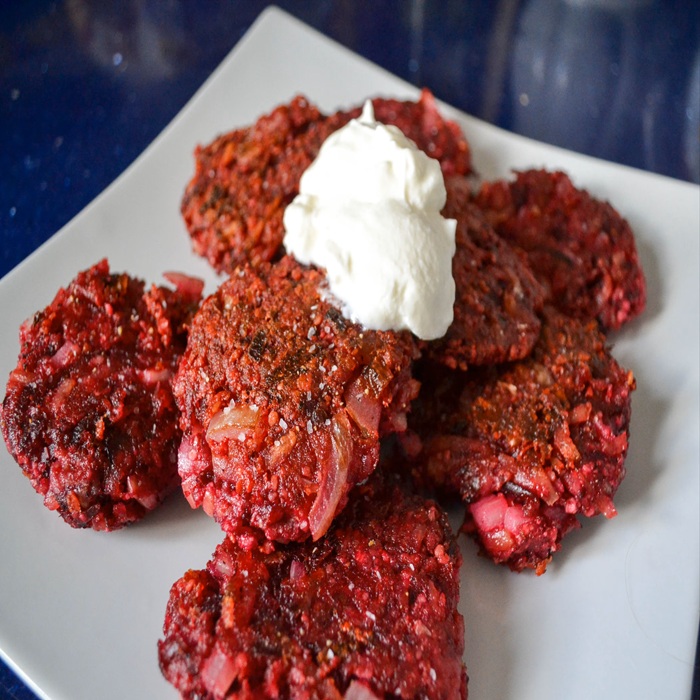
  • Beetroot latkes

    Beetroot latkes

    Beetroot latkes is a ukrainian vegetarian favourite that comes together with everyday ingredients and a little patience. Here’s how we make it in our test kitchen.

    Ingredients

    • 1 tablespoon Rapeseed Oil
    • 4 tablespoons Greek Yogurt
    • 1/2 bag Mint
    • 150g Rocket
    • 130g Cherry Tomatoes
    • 400g Beetroot
    • 1 beaten Egg
    • 1 tablespoon Plain Flour
    • 1 clove finely chopped Garlic
    • 1 tsp Caraway Seed
    • 1/2 teaspoon Ground Cumin
    • Zest of 1 Lemon

    Method

    Heat the oven to 180C/160C fan/gas 4. Make the latkes by combining all of the ingredients.

    Heat the oil in a large non-stick pan. Spoon in the mixture to make six round latkes. Fry for 4-5 mins on each side, then transfer to a baking sheet and bake for 10 mins.

    Combine the yogurt and mint in a small bowl. Toss the salad leaves and tomatoes together, then serve the latkes with the mint yogurt and salad.

    Want to watch it come together? See the full walkthrough.
  • Patatas bravas: dos frituras, salsa aparte

    Patatas bravas: dos frituras, salsa aparte

    Las bravas de bar tienen algo que en casa cuesta reproducir: siguen crujientes cuando llegan a la mesa. El truco no está en la salsa sino en la patata, que se fríe dos veces, y en no juntarlas hasta el último segundo.

    Ingredientes

    • 900 g de patatas peladas y en dados
    • 3 cucharadas de aceite de oliva para la salsa
    • 2 cucharadas de aceite de oliva para las patatas
    • 1 cebolla pequeña picada fina
    • 2 dientes de ajo picados
    • 225 g de tomate triturado de lata
    • 1 cucharada de concentrado de tomate
    • 2 cucharaditas de pimentón
    • Una pizca de guindilla molida
    • Una pizca de azúcar
    • Perejil picado

    Elaboración

    1. Cuece los dados de patata en agua con sal 8 minutos, escúrrelos bien y déjalos secar al aire 15 minutos.
    2. Para la salsa, pocha la cebolla y el ajo en el aceite hasta que estén transparentes.
    3. Añade el pimentón fuera del fuego, remueve 10 segundos e incorpora el tomate triturado, el concentrado, la guindilla y el azúcar.
    4. Cocina la salsa a fuego lento 20 minutos y tritúrala si la prefieres fina.
    5. Fríe las patatas en aceite abundante a 160 °C durante 5 minutos y sácalas. Sube el aceite a 190 °C y fríelas otra vez 3 minutos, hasta que estén doradas.
    6. Sal al momento, sirve y echa la salsa por encima justo antes de llevarlas a la mesa.

    Consejo

    El pimentón se quema en segundos y amarga toda la salsa. Apaga el fuego antes de echarlo y remueve fuera del calor.

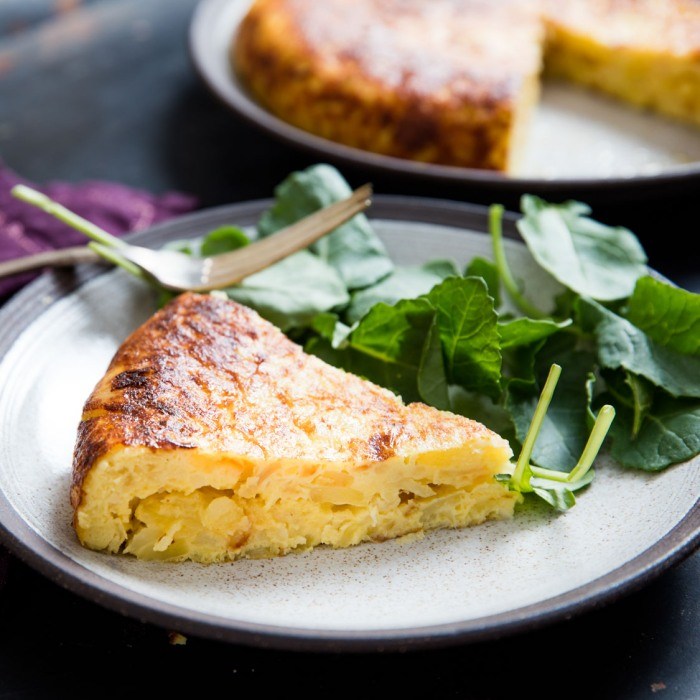
  • Tortilla española: jugosa por dentro, sin discusión

    Tortilla española: jugosa por dentro, sin discusión

    La eterna discusión española es con cebolla o sin cebolla. La que casi nadie discute es la textura: por fuera cuajada, por dentro jugosa. Para llegar ahí hay que confitar la patata a fuego bajo, no freírla, y dejarla reposar dentro del huevo batido antes de cuajar.

    Ingredientes

    • 400 g de patatas en láminas finas
    • 1 cebolla en juliana
    • 8 huevos
    • 4 cucharadas de aceite de oliva
    • 25 g de mantequilla
    • 6 dientes de ajo laminados
    • Un puñado de perejil
    • 1 baguette
    • 4 tomates de rama
    • Un chorrito de aceite de oliva virgen extra

    Elaboración

    1. Calienta el aceite a fuego medio-bajo y añade la patata y la cebolla con una buena pizca de sal.
    2. Confítalas 25 minutos removiendo de vez en cuando: tienen que quedar blandas y pálidas, nunca doradas.
    3. Escurre el aceite sobrante y reserva 1 cucharada.
    4. Bate los huevos, mézclalos con la patata caliente y deja reposar 10 minutos.
    5. Calienta la mantequilla y el aceite reservado en una sartén de 24 cm, vierte la mezcla y cuaja 4 minutos a fuego medio.
    6. Dale la vuelta con un plato y cuaja 3 minutos más. Sirve templada con pan frotado con tomate, ajo y perejil.

    Consejo

    Ese reposo de 10 minutos es el paso que casi todo el mundo se salta. La patata suelta almidón al huevo y es lo que da la textura cremosa del centro.

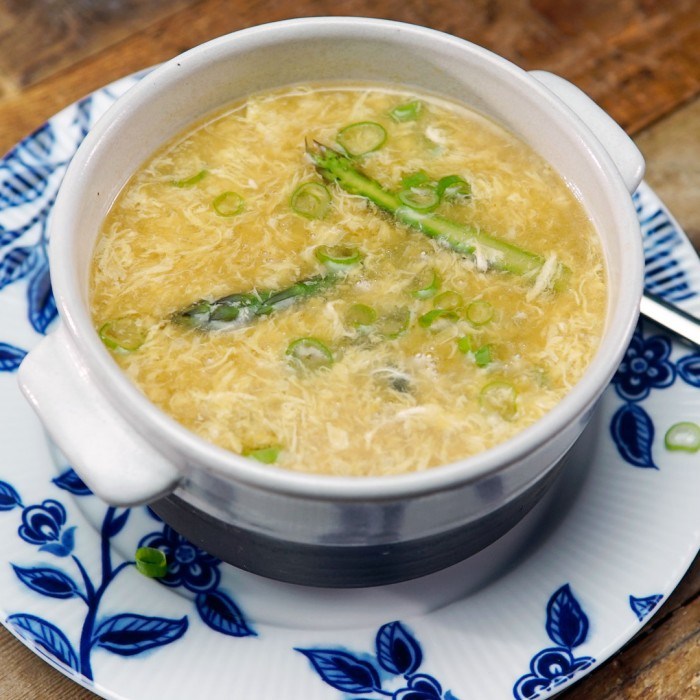
  • 蛋花汤:怎么让蛋花变成丝,而不是块

    蛋花汤:怎么让蛋花变成丝,而不是块

    蛋花汤是最简单的汤,也最容易做失败——蛋一下去就结成大块,卖相全无。想要蛋花成丝,只需要记住三件事:汤要微沸不滚,蛋液要细流慢倒,筷子只朝一个方向搅。

    材料

    • 鸡汤 3 杯
    • 盐 ¼ 茶匙
    • 糖 ¼ 茶匙
    • 白胡椒少许
    • 香油 1 茶匙
    • 青豆 ⅓ 杯
    • 蘑菇 ⅓ 杯,切薄片
    • 玉米淀粉 1 汤匙加水 2 汤匙调匀
    • 鸡蛋 2 个,打散
    • 小葱 ¼ 杯,切花

    做法

    1. 鸡汤倒入锅中煮开,下蘑菇片和青豆煮 3 分钟。
    2. 加盐、糖和白胡椒调味。
    3. 淋入水淀粉,边倒边搅,汤汁变得微稠。
    4. 把火调到汤面只有小泡、不再翻滚的状态。
    5. 蛋液沿筷子细细淋成一条线,同时用筷子朝同一个方向慢慢划圈。
    6. 关火,淋香油,撒葱花。

    小贴士

    汤一定要先勾薄芡再倒蛋液。有了这层稠度,蛋花能悬在汤里,而不是沉到碗底。

  • 番茄炒蛋:中国人的第一道菜

    番茄炒蛋:中国人的第一道菜

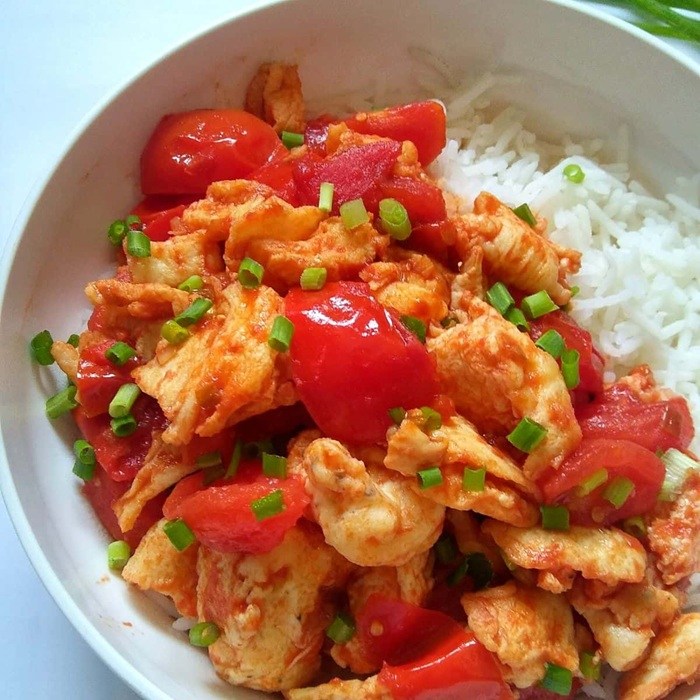
    几乎每个中国人学会的第一道菜都是番茄炒蛋。正因为太熟悉,反而少有人做得特别好。两个容易忽略的细节:鸡蛋炒到七分熟就要盛出来,番茄要炒到出沙、汤汁浓稠才算到位。

    材料

    • 番茄 450 克,切块
    • 食用油 1 汤匙
    • 鸡蛋 5 个
    • 香油 1 茶匙
    • 鸡粉 2 茶匙
    • 糖 2 茶匙
    • 白胡椒 ½ 茶匙
    • 盐 ¼ 茶匙
    • 小葱 1 根,切花
    • 米饭 2 杯,配食

    做法

    1. 鸡蛋打散,加 ¼ 茶匙盐和香油拌匀。
    2. 热锅下油,蛋液倒入,等边缘凝固后大幅度推炒,七分熟立刻盛出。
    3. 原锅下番茄块,中大火炒 3 到 4 分钟,压出汁水直到出沙。
    4. 加鸡粉、糖和白胡椒,尝味调整——糖是用来压番茄酸味的,别省。
    5. 鸡蛋回锅,翻拌 30 秒让蛋块吸饱番茄汁。
    6. 撒葱花,配热米饭。

    小贴士

    番茄先划十字用开水烫一下,皮很容易撕掉。去了皮,炒出来的汤汁才顺口。

  • Pimientos de Padrón: unos pican y otros no

    Pimientos de Padrón: unos pican y otros no

    La tapa más simple del repertorio gallego: pimientos, aceite y sal. Todo el interés está en la lotería —de cada docena, uno o dos pican— y en el punto de fuego, que tiene que ser mucho más alto de lo que la mayoría se atreve a poner.

    Ingredientes

    • 500 g de pimientos de Padrón
    • 1 cucharada de aceite de oliva
    • Sal gorda

    Elaboración

    1. Lava los pimientos y sécalos muy bien: el agua provoca salpicaduras violentas en aceite caliente.
    2. Calienta el aceite en una sartén amplia hasta que empiece a humear ligeramente.
    3. Echa los pimientos de golpe y déjalos quietos 1 minuto para que se marquen.
    4. Saltéalos moviendo la sartén 3 o 4 minutos, hasta que la piel se arrugue y aparezcan manchas tostadas.
    5. Retíralos a una fuente y añade la sal gorda inmediatamente.
    6. Sírvelos calientes, directamente con los dedos por el rabito.

    Consejo

    No llenes la sartén. Si van demasiado apretados sueltan agua, se cuecen en su propio vapor y no llegan a tostarse nunca.